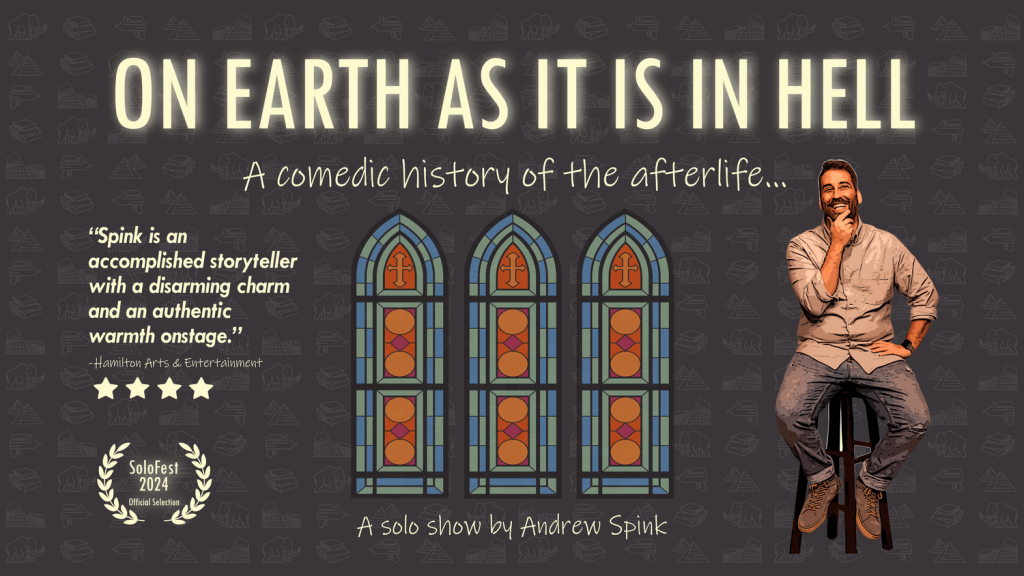
If you’ve loved the talks on our stage, our speaker coaching system is a major reason why. One of our fantastic speaker coaches, Andrew Spink, is performing next week on Thursday June 5th and you don’t want to miss it. If you love storytelling you need to go.
It’s called On Earth As It Is In Hell. This comedic, true-life story, is about Andrew’s young daughter and how she is afraid of going to hell. This brings Andrew’s worst fears to life.
He grew up afraid of Hell, preached about Hell, and left Christianity over Hell. And now, Andrew was struggling to help his daughter feel safe. In mostly funny ways he shares how he learned just what the hell it is we believe anyway, and how our actions are often scarier than our beliefs.
When:Thursday June 5th, 7pm (doors open at 6pm) Where: Here-after theater (inside the Crocodile on 1st ave, Belltown) Tickets:$24.59 on sale now
He’s been on tour in Boston, Chicago, Denver, Atlanta and NYC and this is his one show here at home. Don’t miss it!
We love helping our speakers tell great stories, but part of our mission is to help you do it too, whether it’s for speaking at work or for fun with your friends.
I’m Scott Berkun, former emcee, 7-time Ignite Seattle speaker and head coach for Ignite Seattle. Before I joined the Ignite Seattle team I wrote a popular book of public speaking advice. Since then I’ve learned even more from coaching hundreds of speakers for Ignite and many other events. Here’s my simplest and best advice for you.
1. You must set clear stakes
A good story has something at stake, or at risk, for the main character (typically that’s you!). As a speaker it is your job to establish the stakes for your audience. Why should they care? In our talk submissions, we’re hoping for talk titles that make the stakes clear in just one sentence. There is a big difference in stakes between a story titled “I went to Pike Place Market” and one called “How the gum wall nearly killed me.” The former is a fact, the latter is a story. Which talk would you rather hear?
Boring stories are just a series of events. “I went here, I did this, then I went there, blah blah blah.” Even if those are amazing places or achievements, they don’t mean much without stakes. Alternatively, a good story makes you care about what’s happening. You feel personally invested. Good storytellers achieve this by working hard to think about the stakes and making them interesting to the audience.
Stakes can be simple but they must be powerful. Everyone has been in love, or has had their heart broken. Everyone has a wish, or a fear, or a secret they’ve never told anyone. We coach our speakers to think about the biggest feelings in their story. What was the moment they were most afraid? Excited? Sad? Shocked? That’s where to slow the story down and tell us about that feeling. Stakes are more emotional than logical, which means a great story can be about an ordinary daily experience if the stakes are high enough.
Stakes can also be surprising. We love talks that surprise us by making us interested in topics or situations we would never have found interesting if not for the way the speaker has told the story.
Most advice on speaking fear is terrible. Please do not listen to it. Do not imagine the audience naked or practice in front of a mirror. Instead we teach people a simple fact: when you feel nervous your body is simply giving you energy to do a good job. It means you are doing something you care about, which is good. What you do with that energy is up to you and that’s what we coach speakers to focus on.
The truth is all performers feel nervous energy before they perform. This is true for star athletes and rock stars too. The reason is our brains evolved to worry when standing alone in front of many other creatures. Eons ago, before civilization and polite manners, standing alone usually meant you were about to get eaten. Our brains simply do not understand theaters, stadiums or classrooms, at least not yet. Instead of nervous energy, call it performance energy. Your body wants you to perform well. Isn’t that nice?
In other words, you overcome speaking fear by framing what you’re feeling in a better way. Being nervous is not a sign you are a bad speaker. Or that your story isn’t good. It’s just your brain doing it’s job keeping you alive. So embrace your body. Use that energy to practice more, or to make sure you get to wherever you are speaking early so your body can learn to feel safe in that space.
[You can watch my live talk about overcoming speaking fears and yes I felt nervous while doing it – in part because this room at Google’s HQ was right next to a noisy cafeteria at lunchtime! Extra challenging!]
3. Have beats and a rhythm
Since Ignite talks are only five minutes long it’s natural that we treat every second as precious. But everyone should care about time. Why? Attention spans are short! And it’s rhythm that makes it easy for for people to pay attention. In all music it’s the beat that helps you anticipate and trust what comes next. And storytelling is as much about rhythm as it is about melody.
A beat means a major event in the story. Every good story has a series of clear beats. We coach speakers to have one beat per minute as a rough guide. The first beat is typically for setting the stakes. If they establish the stakes later… it’s too late! More than a minute usually means they’ve spent too much time setting up the story and not enough telling it. Good storytellers get to the heart of the story quickly which takes effort. You have to be willing to edit and cut things down to the bone.
One common shortcoming in everyday storytelling is people who think they have an interesting story, but haven’t yet filtered out all of the not very interesting parts. Good storytellers do the hard work for the listeners. They eliminate all of the unnecessary details and facts and provide a compelling way to see what happened. Or they make profound choices that are irresistibly interesting.
For example, Linnea Westerlind visited every single public park in Seattle. She told us she wanted to do a talk about the experience and what she learned. It was easy to accept it because she had already done something unusual and interesting. Her story had naturally high stakes: who makes a commitment like this (it took years)? What motivated her? What did she learn? You can watch her talk here.
I’ve coached hundreds of speakers, and given hundreds of talks, and I promise you no one tells a good story without doing the work. It’s the people who do the work that typically do the best on any stage. Half the effort is thinking about the story (setting clear stakes and thinking about beats). The other half is in refining the performance of the talk through practice.
We strongly encourage speakers to talk their way through their material. To start practicing a rough version of it right away. At coaching sessions we have speakers improvise their story for two minutes and see what happens. We give them feedback on what to keep and what to reduce and have them do it again. And again. it’s this process of practicing and refining that has led to many of the best talks you’ve seen on our stage.
Some speakers prefer planning and writing first, which is OK. The danger is the trap of rehearsing and memorizing. You are not doing Shakespeare where the audience knows all the lines. You are also not a trained actor. This means that rehearsing and memorizing will likely make you sound more like a robot and less like yourself. You’re trying to be perfect for no good reason.
No one in the audience wants perfection. What they do want is to hear a good, thoughtful story from an interesting person. That’s it. Even worse, trying to be perfect makes most people more nervous, not less. Instead be OK with saying things a little differently each time. Be OK with taking some breaths, and some pauses, like a normal human being does. It’s OK to make little mistakes or to repeat parts. Even the best speakers do this sometimes. If you want to obsess, focus on having quality stakes and beats. If you get those right you’ll do well and you’ll sound less like a robot and more like yourself.
Learn by example: come to our next show
You can find me at our next event this month. Come up and say Hi! I’ll even answer your public speaking questions if I’m not too busy helping speakers prepare.
Thursday May 22nd, at Town Hall Seattle
Doors open at 6:30pm. Get there early for a pre-show activity
Show starts at 7:30pm
Show will end around 9:30pm, followed by an after-party
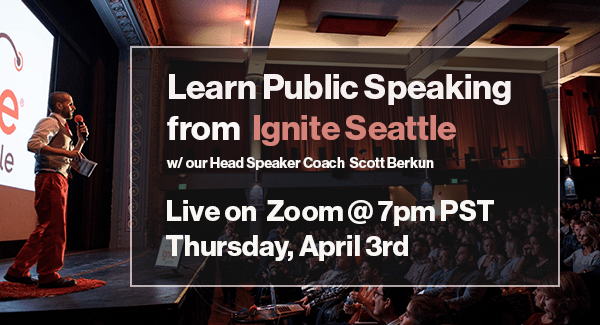
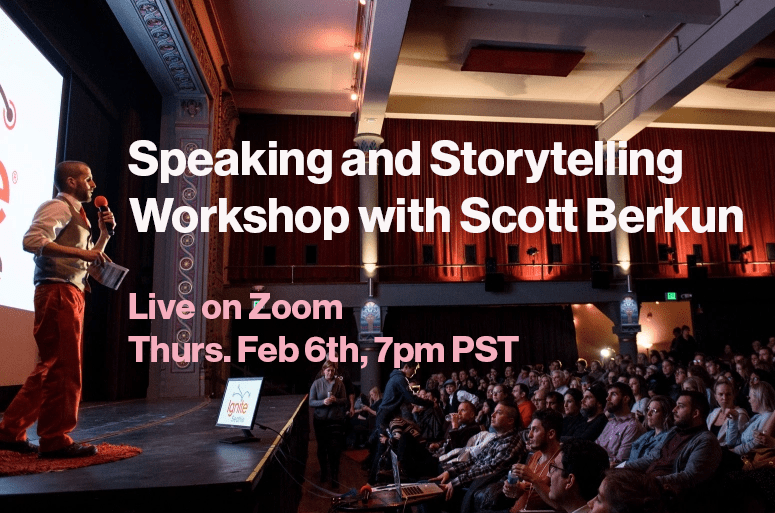
Do you want to learn how to speak and tell stories as well as the people you’ve seen on our stage? This is your chance! Our next free workshop is on Thursday April 3rd on Zoom. It’s FREE and open to everyone.
1. Get our best lessons quickly. Our head speaker coach, and bestselling author, Scott Berkun, has coached hundreds of speakers. You’ll get his best and most effective lessons for how to be a better public speaker and storyteller. And you can learn more about Ignite Seattle and how to submit talk ideas.
2. Learn fast and have fun. If you’ve been to our events at Town Hall, you know how much we care about making sure you have a good time. This session is no different! You’ll get a short talk identifying the common mistakes people make and advice on how to improve. And then there will be an open workshop where you can get live feedback on your own story or presentation.
3. Who is your teacher? Berkun is a bestselling author and popular speaker on creativity, innovation, culture, and many other subjects. He is the founding speaker coach for Ignite Seattle and a former MC for the event. He’s one of the most experienced coaches in the Seattle area, and gives dozens of presentations annually in the U.S. and around the world, so he practices what he preaches.
Part of our mission is to help everyone become a better speaker and storyteller. You are invited to join this fun and fast paced session where you’ll quickly learn how to improve your skills and enjoy speaking and storytelling more.
If you’re coming to our next event on Feb. 20th this is a great way to learn more about us and what it takes to be a great speaker on our stage.
Registration:SIGN UP HERE (free!) When: Thursday Feb 6th, 7pm PST Where: Zoom/online Who: Led by Scott Berkun, our founding speaker coach, and author of the bestselling book, Confessions of a Public Speaker
What will you get?
Clear and actionable advice
A fun and fast paced session
Open Q&A for your questions and specific situations
Time permitting: personalized coaching on a short presentation that you are brave enough to practice with Berkun (a $$$ value you get for free).
Who should attend?
Beginner to intermediate speakers
All are welcome but the focus is on folks with less experience
People who have a sense of humor and like to have fun
Bring your questions – this is interactive!
Who is Scott Berkun?
Berkun is a bestselling author and popular speaker on creativity, philosophy, culture, business and many other subjects. He’s the author of ninebooks, including TheMythsofInnovation, Confessions of a Public Speaker, and The Year Without Pants. He is the founding speaker coach for Ignite Seattle and a former MC for the event. He’s one of the most experienced coaches in the Seattle area, and gives dozens of presentations annually in the U.S. and around the world, so he practices what he teaches.
In 2010 I started the speaker coaching program here at Ignite Seattle. Before I joined the team, I was a speaker many times, including an Ignite talk on how to give good Ignite talks. I know first hand how challenging public speaking can be, especially in our format, which requires slides that auto-advance. We do this to keep our talks exciting and fast paced, but it does add some extra challenges.
We’ve now coached hundreds of speakers for our event, many with little public speaking experience. And since our mission is to help everyone become better speakers I’ll be sharing more of our lessons with you here.
This post is a behind the scenes view of what our coaches, myself, Beth Jusino and Andrew Spink, and our entire organizing team, do for our speakers.
Design the audience experience
To help our speakers before they get on stage, we want an audience that feels like they are already part of something fun. We think of the event as a show, where the MC, the organizing team and each of the speakers have a role to play. We have pre-show activities in the lobby, so when guests arrive they can get a drink and do something fun related to the show, or just chill out and observe.
We have intermissions that make it easy to talk to people if that’s your thing, or take a break and have a snack. We try to keep the experience going all the way through to the last call at our after-party (open to all attendees). We do everything we can to create an environment where it’s easy to relax, learn, grow and experience what our speakers have chosen to share.
Speakers are the stars
From the moment we send out acceptance emails to speakers, our entire team is committed to treating speakers like stars. We see them as the talent, and our role is to be their support team. We know that if we take the event seriously, speakers will put in the work and do a great job on our stage.
All speakers are encouraged to participate in three levels of training before the show:
Speaker coaching workshop: we developed a fun format that focuses on learning skills through practice. We also share a meal together so speakers get to know the organizing team they’ll spend time with in the weeks leading up to the event.
Individual coaching: Speakers are paired with coaches who give them customized feedback on Zoom or in person.
Final rehearsal: we get together in-person a second time to see near-final talks and plan the speaking order for the show.
We typically get 50 submissions for each event and only have 12 or fewer speaking slots. This means we turn away dozens of people who want to participate (you can submit your talk idea here). We sometimes do smaller open-mic events in between shows to give more people a chance to share their story to a supportive audience.
The stage is your home
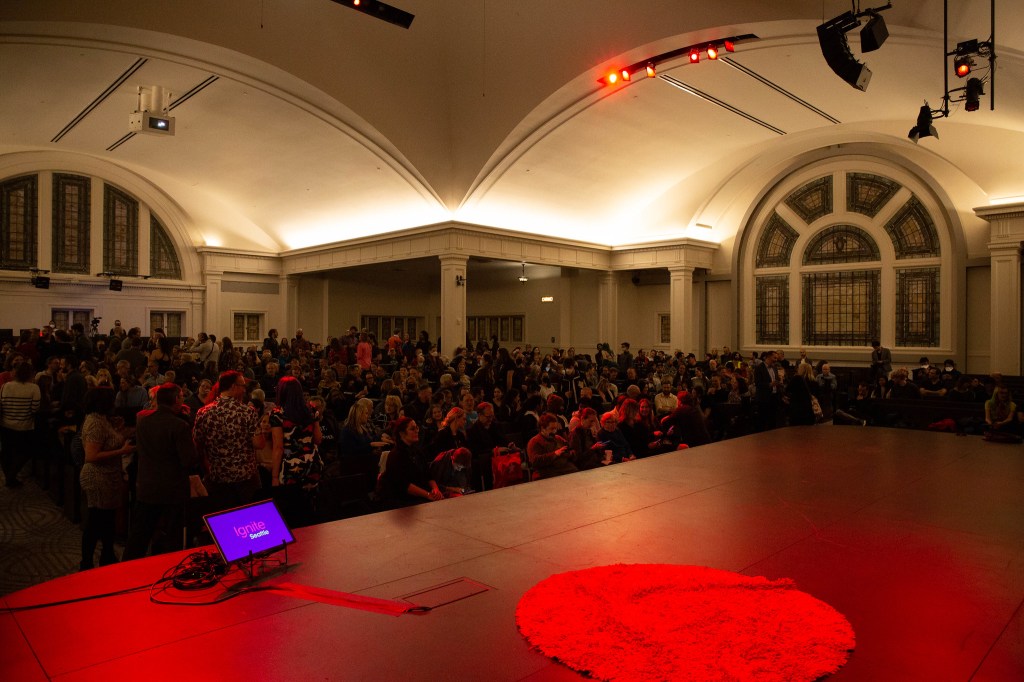
We know from neuroscience that fear of speaking comes from unfamiliarity. At the beginning of speaker coaching we walk speakers through what the event will actually be like: where they will sit, how they will come on stage and what the stage itself looks like from the speaker’s perspective.
We want speakers to arrive feeling like they’ve been there before. We always have a confidence monitor (a screen showing what is on the projector behind them) on stage so they can focus on their delivery and not worry if the screen behind them is working or not.
We also invite speakers to come to our venue, Town Hall Seattle, hours before the event starts. We don’t want them fighting through traffic or worrying about being late. Instead we want them relaxed, safe, fed and feeling like they are at home with the organizing team.
Know your stakes
We believe in the classic storytelling advice to identify the stakes of your story. Stakes are defined as the risks or rewards for the main character. For educational talks, the main character is the audience and how they can learn or grow. Establishing the stakes with the audience early creates anticipation, tension and interest. It’s stakes that invite the audience to care about a story and what is going to happen next.
This is why our submission form is so short. If you can’t explain the stakes of your story in just 100 words, it’s a sign you’re not going to be able to do it in 5 minutes on stage either.
Here are titles of past talks with clear stakes, which make it easier to build a good talk:
I’m the Weirdo Who Left the Elevator Note
How to Lose Yourself in a Labyrinth
Dating Via Your Dad and an Ad
You Can’t Ask a Choking Man for Instructions
We encourage speakers to watch Ignite Seattle talks from our archive. They are only 5 minutes long! You can easily watch ten in an hour and get your own sense for what works well or doesn’t.
Your first minute matters
Everyone hates people who start telling a story but never get to the point. This is the opposite of what we coach for. We know most people, most of the time, can get to the point faster than they do. A TV commercial is 30 seconds long. TikTok videos and Instagram Reels are even shorter.
For our speakers, we coach them to get to the heart of their talk around the first minute mark. That gives them 80% to tell the most interesting version of their story, or answer the question asked in their title.
How do we achieve this? Editing, feedback and practice! In our group sessions and one-on-one coaching, we ask speakers to practice and explore, figuring out what is most important to say and what can be cut.
Craft your story first, slides later
We tell our speakers that if somehow we had to choose between having enough power for their microphone or the PowerPoint slides, we’d always pick the microphone. Why? Slides are props. What matters most is the person, their voice and their story.
We strongly recommend speakers work on just giving a great talk in five minutes first and work without any slides for awhile. This is the easiest way to neutralize the challenges of auto-advancing slides. When your talk is mostly figured out, you can just have slides that are images related to your theme, but open to interpretation, allowing your talk to work even if your timing isn’t perfect every time.
Trust our MC
Ignite Seattle has one of the most vocal and supportive audiences anywhere. We’ve been training our audience for years that they are lucky to get to sit back and watch, instead of having to get up on stage. Our MC plays a key role in reminding the audience of this every show.
The MC opens the show, gets the audience energy level up, introduces the speakers (so they always start with a round of applause) and takes care of any surprises or last minute housekeeping. The MC is on stage more than anyone else and they play a key role in Ignite Seattle culture (including often wearing the traditional red pants).
Our MC is always part of the team at speaker coaching and rehearsal, even if they are a guest MC.
Now we want you to do something
You’ve learned more about how we coach our speakers. Here’s how you can get involved:
Come meet the Ignite Seattle organizing team for a fun and informal AMA (Ask Me Anything) session. Our speaker coaches and producers will be there to answer whatever questions you are curious about. Or maybe you have an idea or suggestion for us to consider.
This free event, open to all, will take place next Thursday, 1/25 at 7 pm PST on Zoom (Register Here).
Do you want to learn our secrets for organizing such great events? Want advice on pitching us your Ignite talk idea? Curious about what it’s like to be part of the Ignite team and want to join us? Or want public speaking tips from people who’ve literally walked the walk and talked the talk? This is the event for you.
We’ll be hosting this AMA (ask me anything) style where you’ll get to go behind the scenes of one of Seattle’s most popular live storytelling events. Speaker submissions are due in less than a month, so this is the perfect opportunity to get our feedback if you’re even just starting to brainstorm – you won’t want to miss out!
Details: All are welcome at this fun and informal online session run by me, Scott Berkun, the head speaker coach for Ignite Seattle and author of the bestselling book, Confessions of A Public Speaker.
Come with a talk idea or a presentation you want to practice. Any kind of presentation or story is welcome (does not have to be an ignite talk). Or come to be in the audience, listen in and learn tips, lessons and advice.
How it works:
Speaking slots are first come first served
Each speaker will get 2 to 3 minutes, no slides allowed
You can use a new story or something you’ve presented before, up to you
You will get actionable feedback and lessons
We will continue until we run out of speakers 🙂
There will be time for Q&A, so bring your questions
Thanks to all of you who joined 700+ in our live audience for yet another amazing evening of fun, powerful and surprising stories told in just five minutes.
On December 7, 2006 the very first Ignite Seattle was held at the Capitol Hill Art Center (CHAC) in Seattle. I wasn’t one of the organizers, but I was there for that magical night 15 years ago. There were over 350 folks packed into a tiny space meant for about half that many. It was crowded, it was hot, and it was chaotic but it was obvious to me that I was experiencing something special.
Capitol Hill Arts Center (RIP)
The conceit was simple – give a 5 minute talk with 20 slides, but the slides would auto-advance every 15 seconds and while a lot has changed in 15 years we remain true to our format.
The Crowd at Ignite Seattle #1
The talk topics of the first Ignite Seattle were pretty tech industry focused, but it was clear that everyone who spoke that night was passionate about their subject matter (another requirement for a great Ignite talk). We experienced many delightful talks including:
Bre Pettis showing off some Make Project Disasters
Arlo Speedwagon discussing Mortality and User Experience
Jordan Schwartz teaching us how to make our own SMS service
Shelly Farnum showing off Dorkbot Seattle
Beth Kolko talking about how Info Tech in the Developing World
and roughly 20 more talks that night (including our very own Scott Berkun talking about innovation) and a popsicle stick bridge building contest.
I left that night intellectually overstimulated and exhausted (in the best possible way), but I also left wanting to be a part of the event in some capacity. I started working on Ignite just prior to the 4th event the very next year.
Bre Pettis and Brady Forrest – Ignite Seattle’s Progenitors
It’s been a fun ride working on Ignite and Ignite has survived and flourished while living through an economic downturn, moving to 4 different venues (5 if you count the beautifully remodeled Town Hall) and now a global pandemic. And that’s why we need YOU to submit a talk to our next (in person, at Town Hall) event planned for February 17th, 2022. We’re thrilled to be in a place where so many are vaccinated, boosted and craving some social interaction and entertainment.
If you’ve ever thought about standing on the Ignite Seattle stage, now is the time to submit your talk and help bring us back to Town Hall, Seattle and the world!
While a lot has changed since way back then, the magic of Ignite Seattle hasn’t faded for me and I know a lot of you feel the same. I’m overjoyed to be planning our next event and I can’t wait to see all of you there.
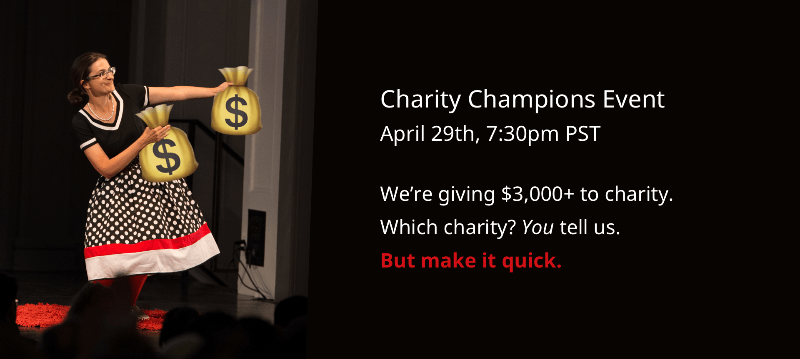
Ignite Seattle is back. We’re hosting a special online event focused on great storytelling and giving back to the Seattle community.
$3,000+ giveaway to local non-profits. Many local groups are doing so much to help the people of Seattle and we’re going to help them. We will put on our virtual stage the best personal stories about local charities and non-profits. The organizations showcased the night of our live online event will receive grants totaling $3,000 or more!
Tell your story about a local organization Submit YOUR story related to a charity by March 22. Has a local non-profit helped you? Or have you observed how they’ve supported a community? Tell us the story. If selected, you’ll be assigned a mentor who will help you with your talk. This is your chance to show up for a nonprofit that’s been meaningful to you! We can’t wait to hear about it.
Free online storytelling workshop To help you develop your story idea and sharpen your presentation skills, we are hosting a FREE Online Storytelling Workshop on Monday, March 15 at 7:30pm. Scott Berkun, professional speaker coach, former Ignite MC and long-time Ignite Seattle co-organizer, will be your teacher. This online workshop will give you his time-tested advice on short-form (remote) public speaking, and some students will get live feedback. Scott rocks. He will help you rock. Register now.
Join the live online event Hosted by the dynamic duo of Marice Sy and Sumit Basu. By attending YOU will help determine how the grants are allocated to the organizations showcased. Tickets are “donate what you can” ($0-$50), all ticket proceeds will be added to the Charity Champion grants.
Spread the word Submissions are open to anyone in the greater Seattle area and the more people who attend the event means more money will go to good causes. Help us get the word out? Thanks.









 Ignite Seattle