Come meet the Ignite Seattle organizing team for a fun and informal AMA (Ask Me Anything) session. Our speaker coaches and producers will be there to answer whatever questions you are curious about. Or maybe you have an idea or suggestion for us to consider.
This free event, open to all, will take place next Thursday, 1/25 at 7 pm PST on Zoom (Register Here).
Do you want to learn our secrets for organizing such great events? Want advice on pitching us your Ignite talk idea? Curious about what it’s like to be part of the Ignite team and want to join us? Or want public speaking tips from people who’ve literally walked the walk and talked the talk? This is the event for you.
We’ll be hosting this AMA (ask me anything) style where you’ll get to go behind the scenes of one of Seattle’s most popular live storytelling events. Speaker submissions are due in less than a month, so this is the perfect opportunity to get our feedback if you’re even just starting to brainstorm – you won’t want to miss out!
Details: All are welcome at this fun and informal online session run by me, Scott Berkun, the head speaker coach for Ignite Seattle and author of the bestselling book, Confessions of A Public Speaker.
Come with a talk idea or a presentation you want to practice. Any kind of presentation or story is welcome (does not have to be an ignite talk). Or come to be in the audience, listen in and learn tips, lessons and advice.
How it works:
Speaking slots are first come first served
Each speaker will get 2 to 3 minutes, no slides allowed
You can use a new story or something you’ve presented before, up to you
You will get actionable feedback and lessons
We will continue until we run out of speakers 🙂
There will be time for Q&A, so bring your questions
In typical Ignite Seattle fashion, we laughed, we learned, we spent an evening together with some of the best community in the city– #44 was another for the books!
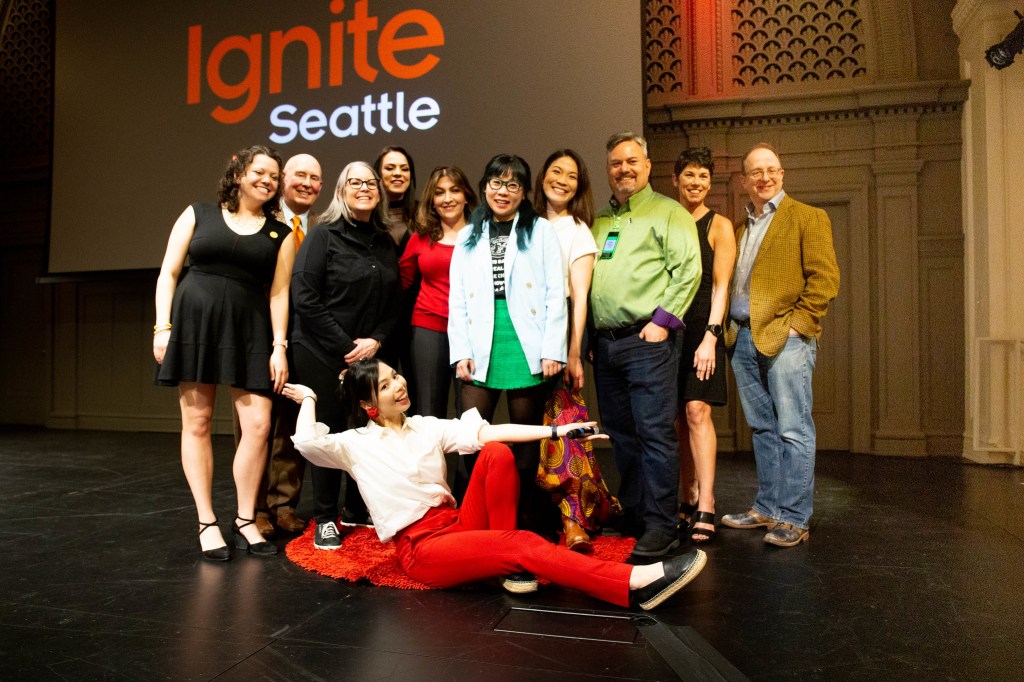
Whether this was your 1st time attending or your 44th, we are grateful for your continued support, energy, and excitement for Ignite. You help make this dynamic community what it is and we can’t wait to see you again at a future event!
And now, without further ado, speaker talks are now live and available for your viewing and sharing pleasure. Post far and wide, you never know whose creativity you’ll ignite to tell their story.…
If you aren’t ready to apply, snag your tickets for our next event, Thursday, March 21, 2024. Reserved seating goes quick, so grab yours now for the best seats in the house!
If you like the shows we put on there are easy ways to contribute to what we do. As a 501(c)(3) non-profit we appreciate all the support we can get in promoting our shows and bringing more people to our events.
Just a minute or two is all it takes. Here’s what you can do:
Are you coming? Invite your friends and community to joinyou. Our events are great for groups, since there’s a pre-show social activity and a long intermission for drinks and conversations.
Have a friend who is speaking? Tag them on social media and ask their friends to attend with you to cheer them on.
Need a morale event at work? We’re an inexpensive way to bring a group together for a fun and memorable night of “edutainment.”
Out of ideas for date night? We’re a great experience for dates, more interactive and cheaper than a movie, plus our shows are great conversation starters (“what was your favorite talk and why?”). Here’s our recommended list of nearby places to eat before the show.
To help you help us, you can copy and paste this to your social media:
We are DELIGHTED to announce that the one and only Nicole Steinbok is coming back to host for us at our upcoming Ignite!
Those of you around since our pre-pandemic days might remember Nicole as our guest speaker for the Summer 2019 Ignite. And if you haven’t met her yet, you’re in for a treat—not only is Nicole a former host and volunteer of our show, but she’s also an alumni speaker (anyone here remember the 22 minute meeting?) We’re lucky to have her back for a night of engaging talks! You don’t want to miss it.
Ignite Seattle is thrilled to be back for its 44th edition! We are excited to bring to you a fun evening filled with an incredible lineup of stories. Our speakers for the evening are:
Dating via your dad and an ad, Ben Schifberg
How to travel with parents, Everest Nevraumont
A life of fire, Jeff Hicks
How to make tumbleweed flavored porkchops, Sibongile Chadyiwa
Seattle needs a siesta, Myer Harrell
How to write an obituary, Megan Starks
I have the body of an athlete., Kim Merrikin
Emotions about money, Susan Fee
Decide where to eat using behavioral economics, Nancy Wang
How a rat experiment cured my anxiety, Peter Feysa
We’re so grateful for those of you who took the time to pitch their ideas to us. We received dozens of submissions from all over the city. As you’ll see, our stories run the gamut of topics and emotions. From enlightening explorations of the mundane, to hilarious anecdotes, we have it all!
Get your tickets at an early bird price of $10 for a limited time. (Believe us, you don’t want to procrastinate, we WILL sell out). The event will be held at Town Hall Seattle on October 26. We look forward to seeing you!
The August sun might be shining, but October will be here before you know it, and that meansIgnite Seattle #44 is right around the corner! Tickets are on sale now for our next event, happening October 26, 2023, at Town Hall Seattle. We’re excited for another night of live community storytelling at its informative, entertaining best.
To make this night work, though, we need YOUR help.
SPEAKER SUBMISSIONS ARE OPEN!
Do you have a story to tell, a valuable lesson to pass along, or a cool life hack to share with the best audience in Seattle? Of course you do. And we want to hear about it!
Speaker Submissions for Ignite #44 are now open and ready for you to add your unique experiences.
Share your killer title and 100 word description by September 14, 2023.
Not sure how to pitch a story? Or even what makes an Ignite-style story? Great–we’ve got you covered.
PRACTICE YOUR PITCH AT THIS FREE TRAINING EVENT!
If you have a great idea, but don’t know how to get it into the 5-minute Ignite format…
Or you have a friend or family member with a great story, but they need some encouragement to get on the stage…
We’re here to help! Not only does Ignite Seattle have a team of professional speakers who will coach, mentor, and assist you at every step if your submission is chosen, we’re also hosting a FREE night of training for aspiring Ignite speakers.
You’ll get actionable and proven advice from experts on:
What makes a great live stage event story (and what we’re looking for at Ignite)
How to identify the spark of your story and grab someone’s attention right away
Plus, there will be plenty of time for you to share your idea or pitch with the Ignite team and get one-on-one feedback.
Your coaches will be:
Professional speaker, bestselling author of Confessions of a Public Speaker, and former Ignite Seattle emcee Scott Berkun
Author, conference speaker, and publishing consultant Beth Jusino
Storyteller, author, and inspirational speaker Andrew Spink
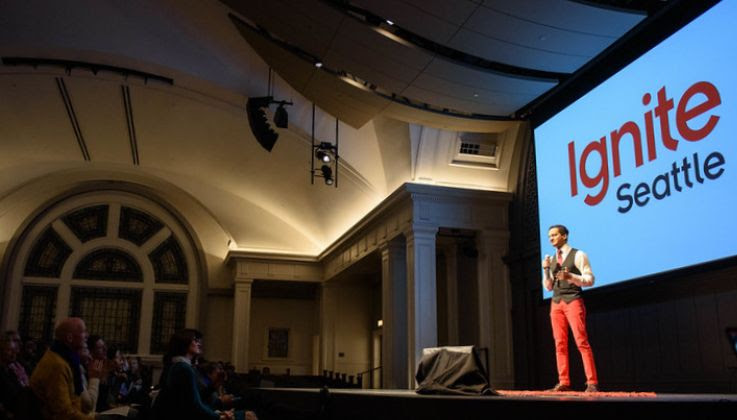
(Scott, Beth, and Andrew are also all Ignite Seattle alumni who have taken their turns on the round red carpet–check out the links above!)
You don’t need to have a talk prepared, or even know yet what story you want to tell, to participate. But if you want to know more about the Ignite stage, this is the night for you.
The training is free, but space is limited, so register today! Let us know if you have questions, and we look forward to seeing you soon.
PS. Help spread the word! If you know someone who has a great story or idea, or wants to feel more confident as a speaker, forward this post and invite them!
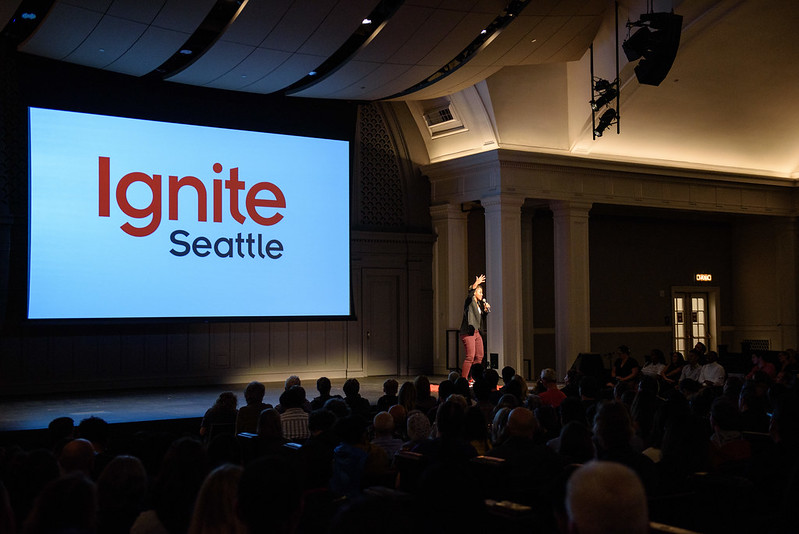
Thanks to all of you who joined 700+ in our live audience for yet another amazing evening of fun, powerful and surprising stories told in just five minutes.
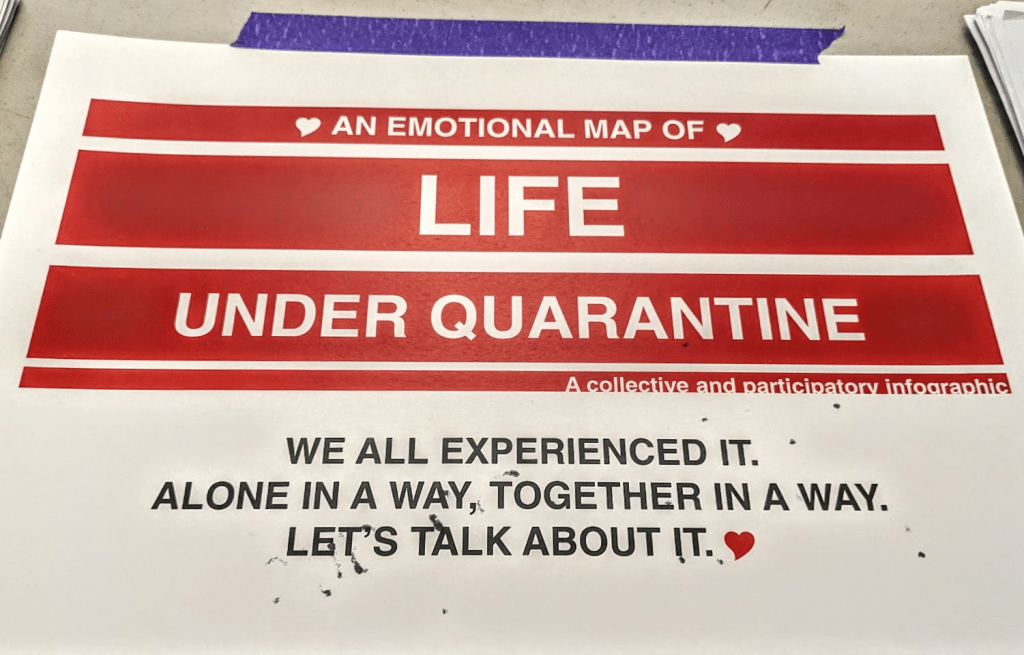
A couple weeks ago Ignite returned to Town Hall for our first live show (43rd overall) since Seattle went into quarantine during the global coronavirus pandemic. It was also my first show as an Ignite volunteer, and my first time planning an Ignite pre-show event. Or any pre-show event, for that matter. A night of firsts.
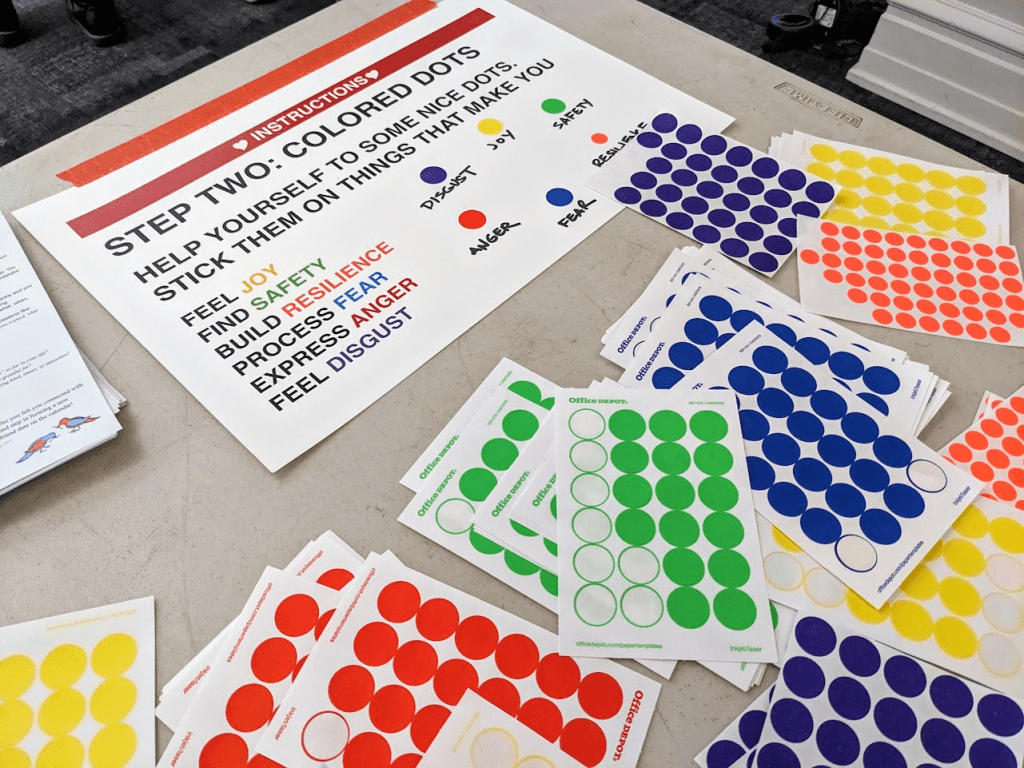
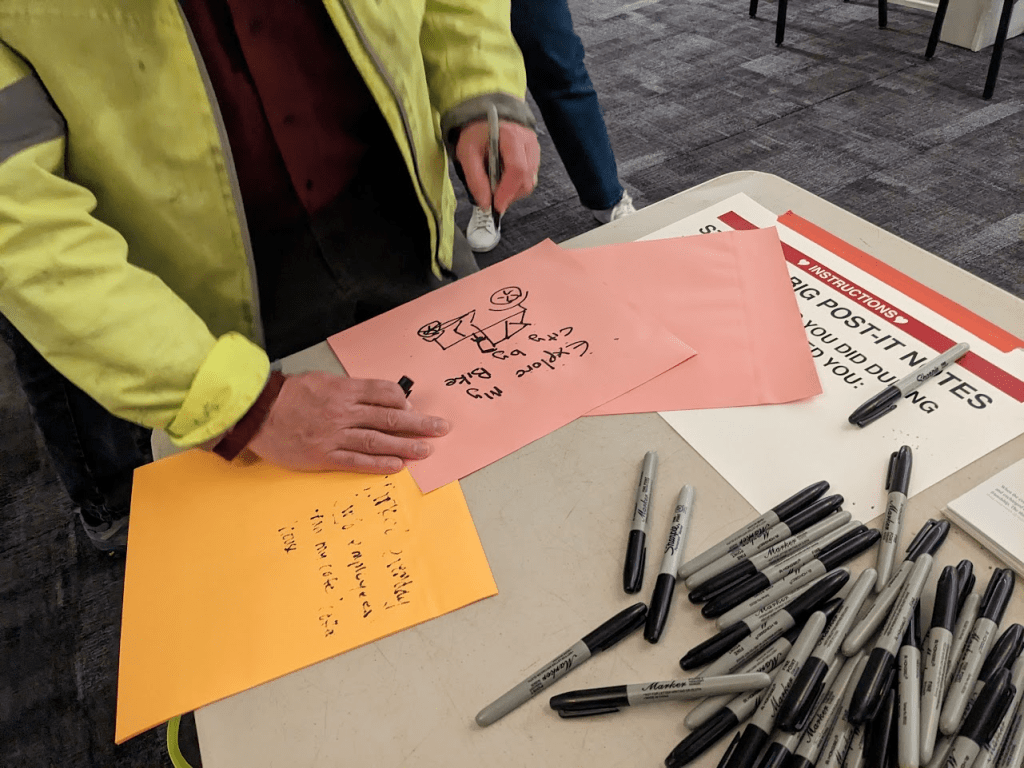
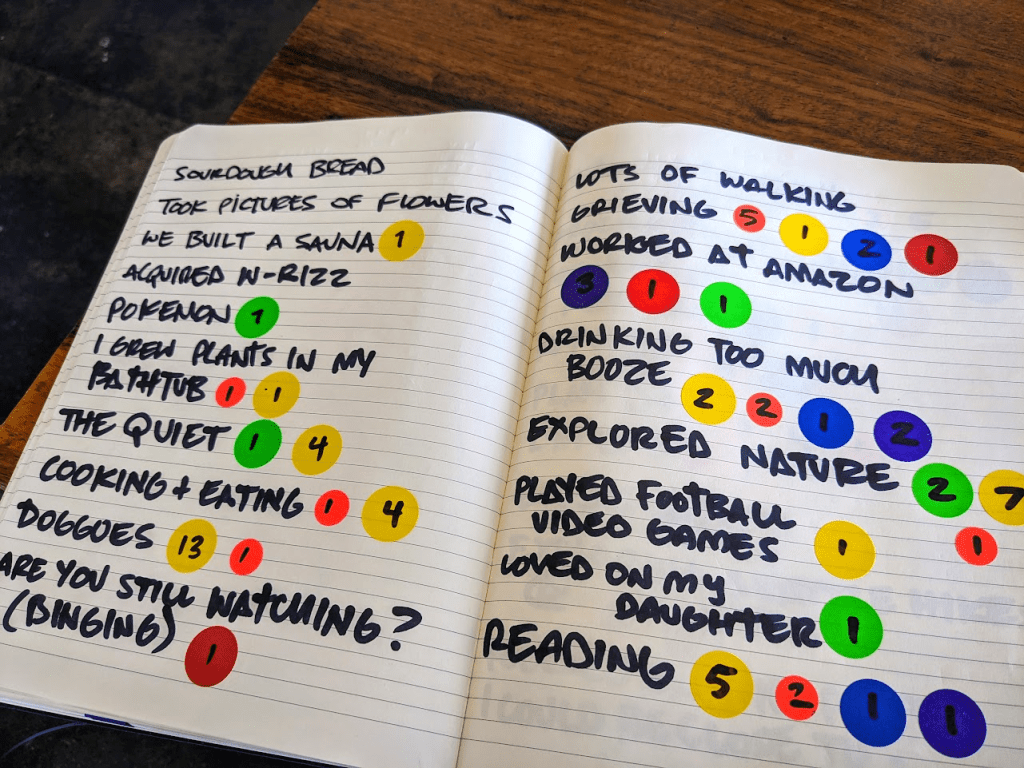
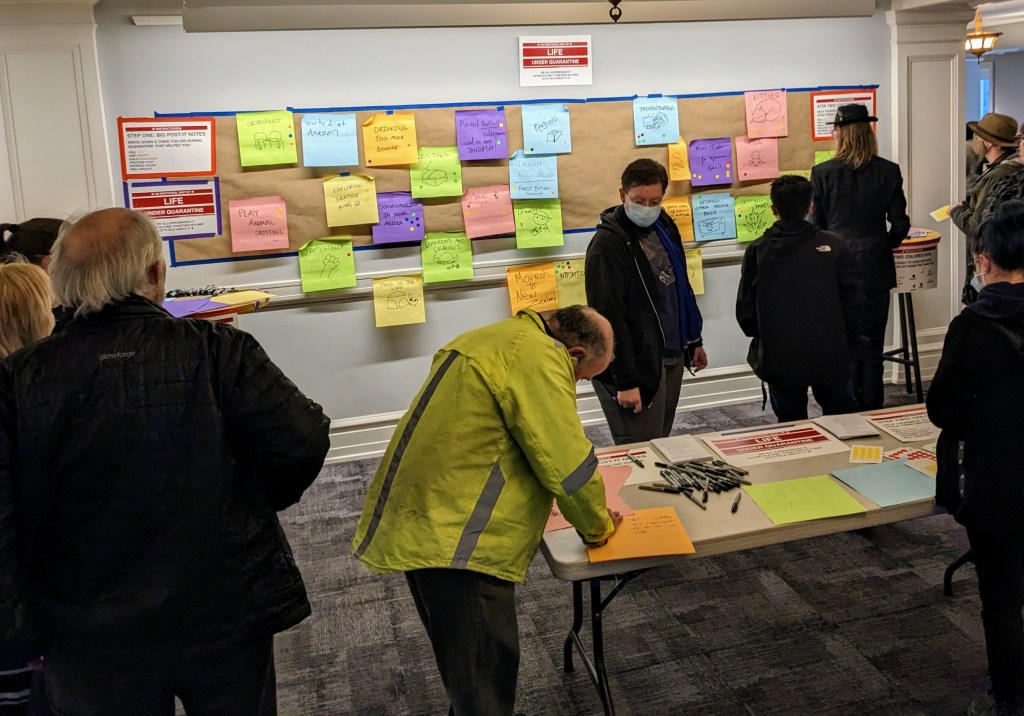
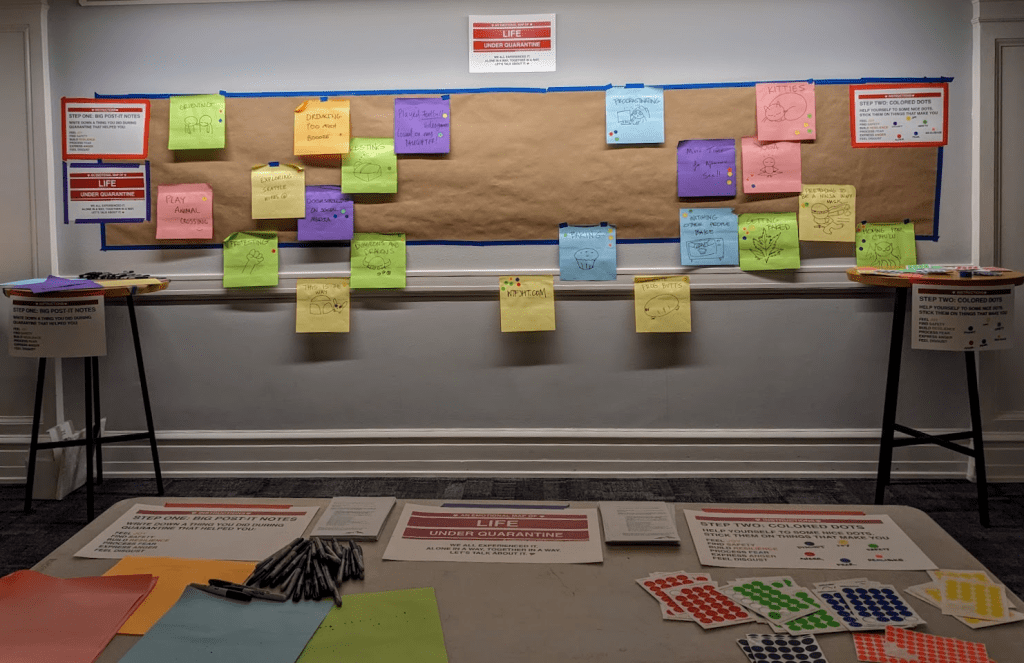
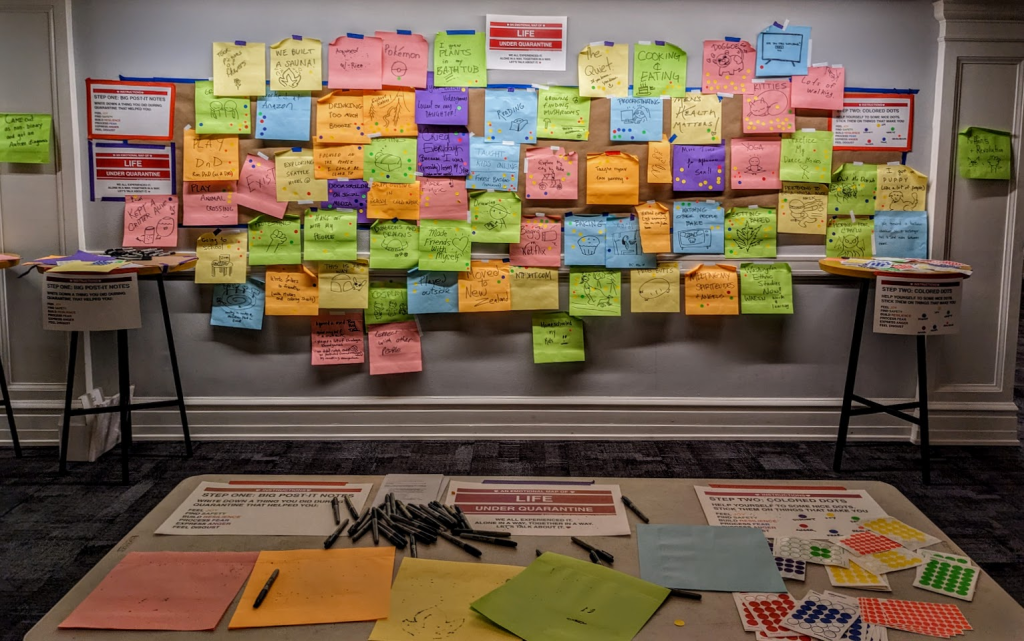
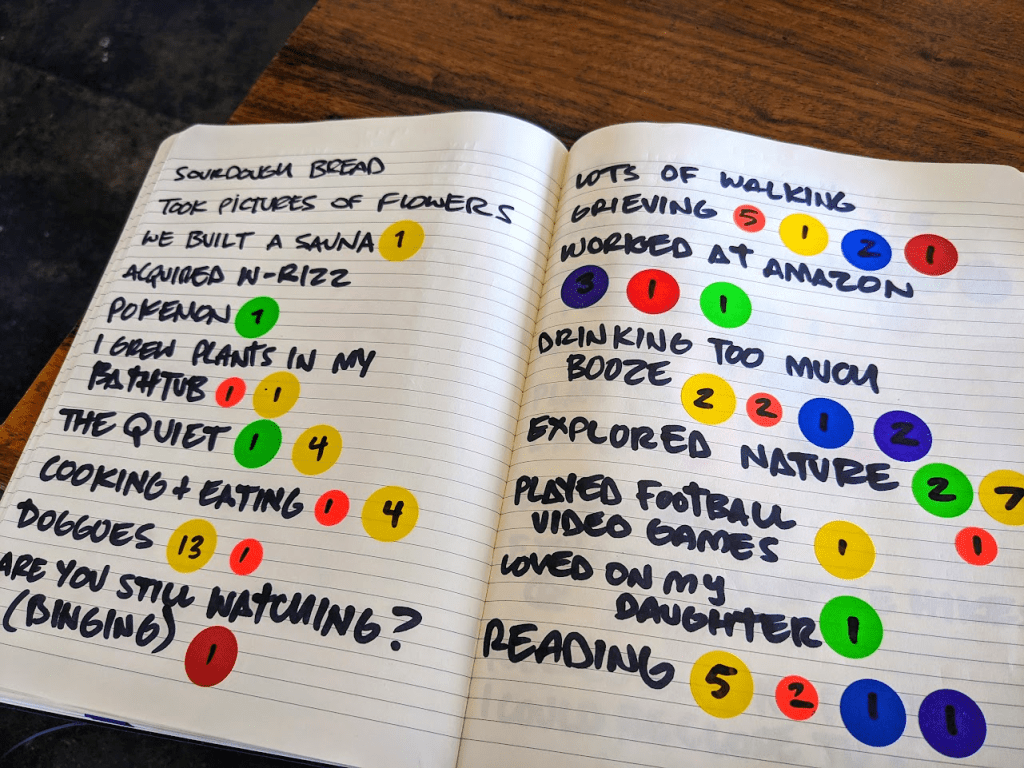
For Ignite #43’s pre-show event my colleagues and I gave everyone very large Post-it notes and Sharpie markers and asked them to write, draw, cartoon, or otherwise explain something they did during quarantine. We also gave everyone stickers with six different colors representing different emotions. We asked everyone to place stickers on any Post-it describing something that helped them to feel joy (yellow), feel safety (green), build resilience (orange), process fear (blue), express anger (red), or express disgust (purple). I didn’t choose these colors or emotions at random, they’re derived from emotional base-pairs hardwired into our brains through evolution–meaning they express elemental survival imperatives (the subject of my long-awaited PhD dissertation).
The purpose of this exercise was for everyone present to build a collective visualization of what we did with our lives during quarantine, and how it made us feel. This data is participatory so it describes the lives of only those people who attended Ignite #43 and chose to participate, rather than a statistical representation of everyone in Seattle. Although if the results say anything, it is that those of us who attended are all definitely from Seattle.
6:30 PM, doors open
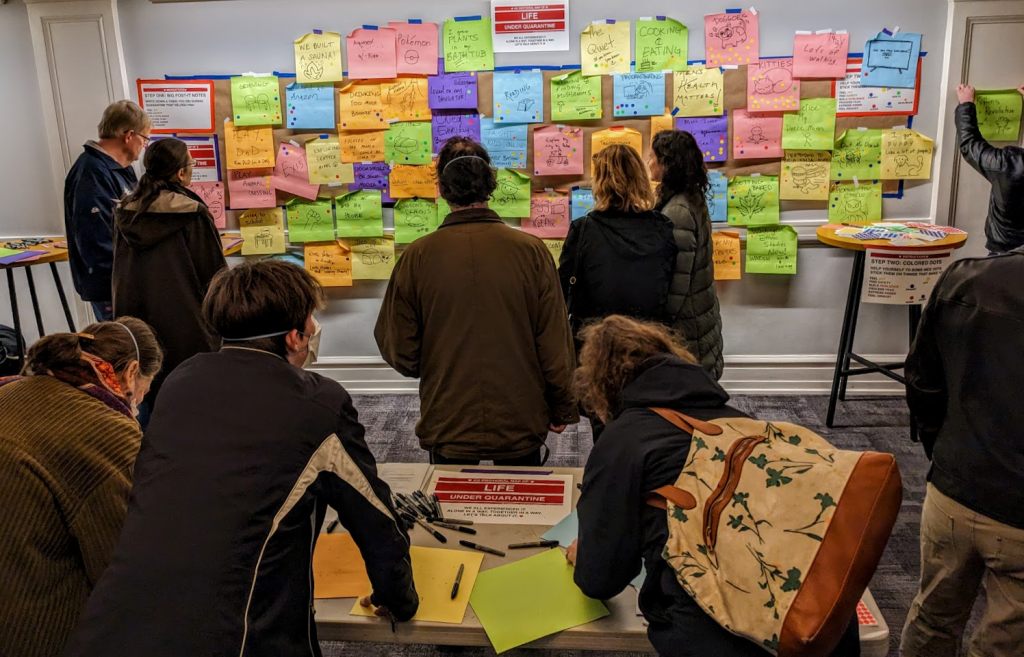
The overall response was quite astounding–in less than one hour before showtime people posted 80 ideas, encoded with over 350 stickers representing all six emotions. So many, in fact, that my colleague Emilie Hall and I spent most of the night feverishly applying painter’s tape in order to keep the map from falling off the massive wall of Post-its. It took nearly all of the first half of the show and intermission to tabulate the results.
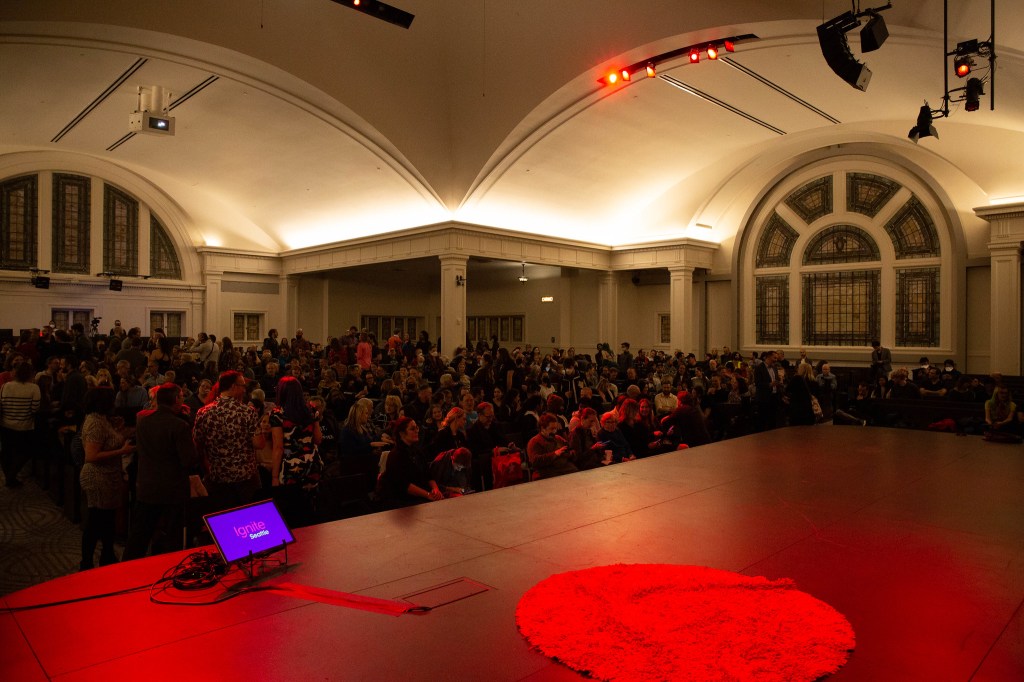
7:36 PM, Ignite #43 begins in the Great Hall
But as is often the case, the process of generating the data was as interesting as the results themselves. As the infographic took shape, interactions emerged between those who participated. In a way, the wall became a safe place to be open and vulnerable about the people we were, or continue to be under quarantine conditions.
People used it as an opportunity to share memories and experiences that brought them joy, situations where they had to encounter and overcome fear, or celebrate someone else’s heartfelt resilience. People contributed a little bit of themselves in the form of visual gags and inside jokes, or sly references to music, shows, and media. There was a performative element as well; with people attempting to out-do each other or post something really special as a clandestine message to someone else attending the event.
As these events unfolded, many of us discovered strangers who survived the same way we did, or felt the same way, resulting in conversations. Mutual awareness of a shared situation suffused throughout these interactions. There were moments of solidarity mingled with fond memories, grief and hardship, and transformative experiences. While the sense of isolation we’ve all felt during quarantine remains undeniable, for at least an hour it felt like a shared experience–a collective trauma which we all survived together.
Indeed, this is why a methodologically-suspect infographic makes for an intriguing art installation. For the entire activity was less intended to produce a piece of empirical data than it was meant to produce a lived experience that helped those of us in attendance process a collective trauma. In other words, like all true art, it wasn’t just about the results, it was about the process.
We don’t often talk about the Covid-19 pandemic in these terms–indeed, it is an almost political act to define when the pandemic exactly ended (if at all). Try Googling it and ere long you will find yourself in an exhausting ideological minefield as I very much did.
What I do know is that this little, deadly virus infected 660 million people, close to 1% of the world’s population; so every 100th person. It also killed 6.8 million people, which is literally the entire population of Seattle nine freaking times over. But even as I write that, I feel a strong urge to make an optimistic declaration. Something that ends with, “but that’s all behind us now,” or “2023 is a new year,” or “things are finally returning to normal.” I feel like doing so is necessary because it signals to you, the reader, that I am a rational, sane person.
But if I’m being honest about how I feel, then I’m not even sure this is over yet, and it feels like every piece of info I read to try and educate myself has a weird political agenda attached to it. Yet I know I need to get on with my life. But what I’ve never done–because this is something we are not taught to do in American society–is express how traumatizing the experience was, share my feelings with others, and find ways to help myself heal from the sheer psychological magnitude of the last several years.
This particular piece was an attempt to create a space where we can do just that–talk about the pandemic without judgment, and sort out how we feel. In that sense, our collective experience of trauma can not only teach us more about ourselves but reveal that we are not as alone as we think. Though we have lived in physical separation, on an emotional level we are getting through this together. We are all experiencing similar things. There is a tremendous opportunity for us all to build greater empathy and take care of each other, if we are willing to come together in spaces such as this.
I am not the first person to observe that collective trauma can also serve as a pathway to resilience and solidarity for communities and if you are interested in learning more, I suggest a few resources including the 2021 PBS documentary The Area, directed by sociologist Dave Schalliol, the work of sociologists Erika Summers-Effler, Herbert Gans, and urbanist Jane Jacobs.
And with that, the results:
This chart summarizes quarantine activities by category. The length of each bar corresponds to the total number of stickers it received. We can think of this like a proxy for emotional response. A longer bar means more people reacted to the individual ideas in this category. Likewise, each color corresponds to a different emotion. The number next to each category indicates how many ideas were submitted in that category.
The chart suggests most of the things we did to live life under quarantine helped us feel joy, find safety, build resilience, and process fear. We also spent a lot of time doing roughly the same things: being in nature, hanging out with kitties, doggoes, being creative, exercising, baking, and of course, getting baked.
The next chart displays all 80 ideas placed on the wall. Like above, the length of each bar also corresponds to the number of stickers it received. Unlike the chart above, the number next to each idea indicates the total number of stickers it received. Again, we are treating as a proxy for emotional response. Each idea is presented in the order of the categories above, and ranked in order of the greatest emotional response. So for example, you’ll find everything that falls under “Art” together, and the largest number of stickers went to “drawing,” followed by “made music,” “cosplay,” “face painting,” and “took pictures of flowers.”
As I look at this chart, what I find the most interesting is that binging Netflix, reading, resting, doom scrolling, and playing with my cats are all things I did every day during the pandemic. I also experienced them much the same way others did, as a way to build joy, safety, resilience, and process my fear. For me, it’s a little bit of evidence to suggest that I’m not so different from the people I see on the street. I also recognize that I’ve beaten myself up pretty mercilessly for doing things like resting, procrastinating, and binging Netflix–when in fact I’m far from the only person who survived that way. In a way, I feel like this chart gives me permission to feel good about what I did to get by in quarantine. After all, I’m just doing what other people in Seattle did, and more broadly, I’m doing the types of things that help a human being survive frightening and uncertain times.
What do you think about when you look at a chart like this? Let us know in the comments below, send us a note, or–if you’re feeling adventurous–submit a story idea for Ignite #44 this October and tell us about your life under quarantine.
8:30PM, data tabulation completed by the end of Intermission
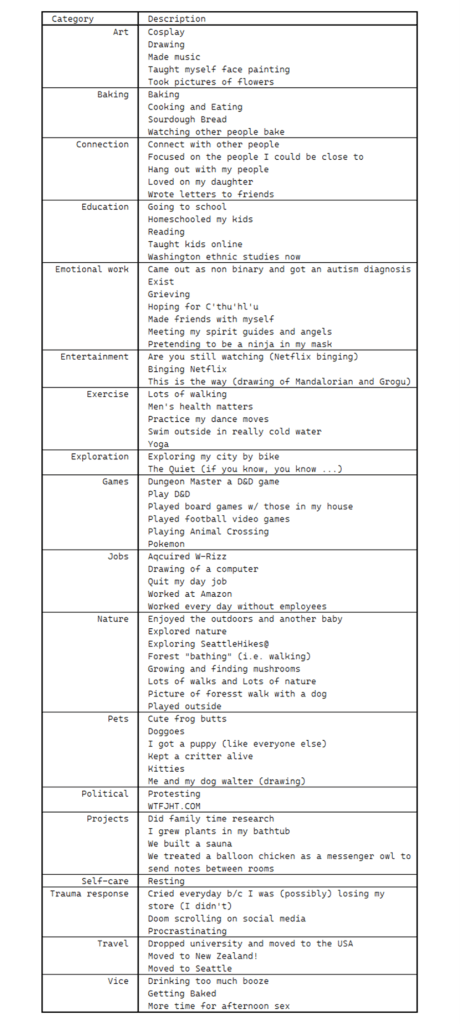
Final note: these categories aren’t perfect, and activities can overlap a great deal. For example, should “taking a walk with my dog” fall under Pets, or Exercise? Is forest hiking considered a Nature or Exploration activity? So let’s bear in mind that these categories were created mainly as a way to summarize the data. Here’s a breakdown for those who are curious:



 Ignite Seattle